
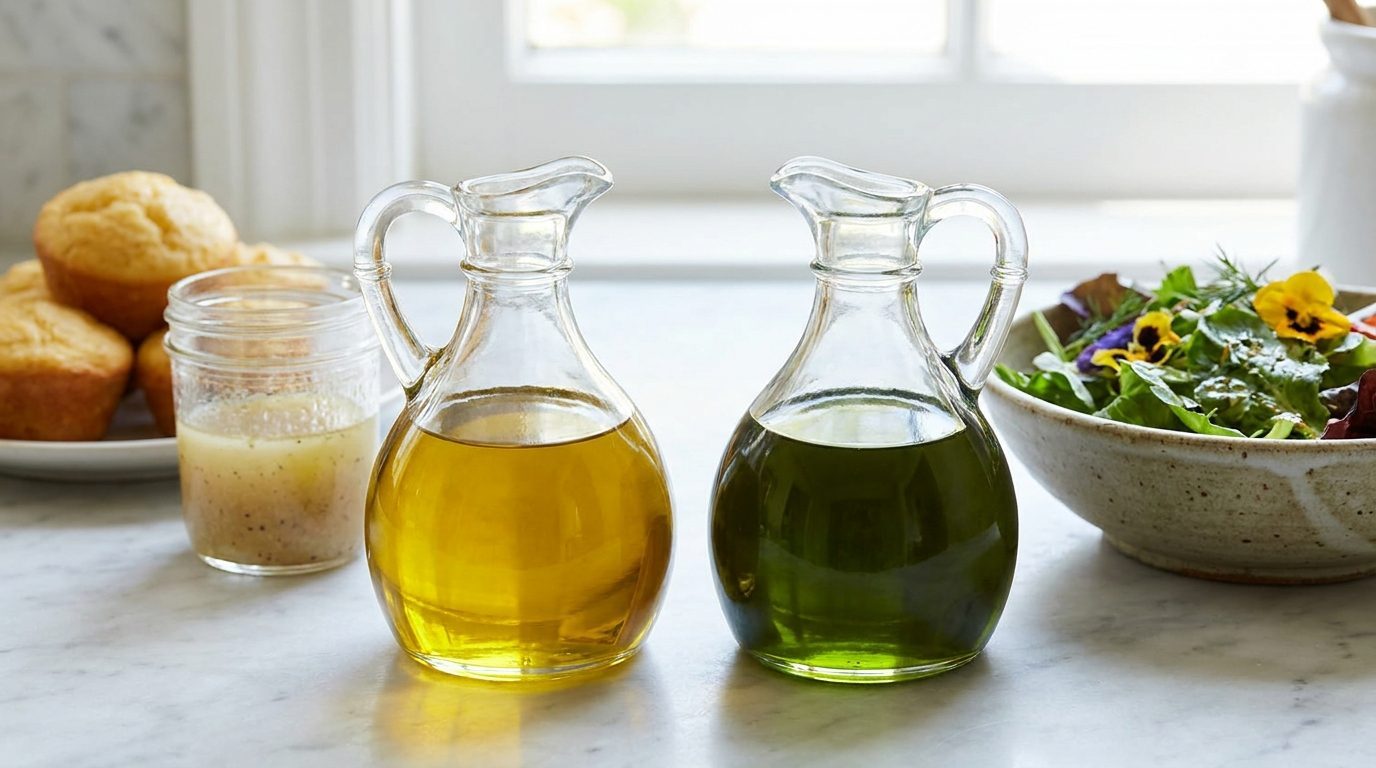
In most cold and low-heat recipes you can substitute hemp seed oil for olive oil at a straight 1:1 ratio. Where it gets complicated is anything involving real heat, and anything where olive oil's flavour is the point. Here is exactly when the swap works, when it does not, and how to adjust the ratio so the result still tastes right.
Can you substitute hemp seed oil for olive oil 1:1?
For uncooked and gently warmed applications, yes. Pour hemp seed oil in the same volume the recipe calls for olive oil and you will get a workable result in salad dressings, dips, marinades, drizzles, and most baked goods. The two oils are both liquid at room temperature and behave similarly when whisked into vinegar, lemon juice, or tahini, so the structure of the recipe does not change.
The catch is heat. Olive oil, especially refined or light olive oil, tolerates frying and roasting temperatures that hemp seed oil cannot. Cold-pressed hemp seed oil has a low smoke point, generally well under what you reach in a hot pan or a roasting tray. Past that point it starts to smoke, the flavour turns bitter and acrid, and the delicate omega-3 fats it is prized for begin to break down. So the honest answer to the 1:1 question is: yes for cold and low-heat dishes, no for high-heat cooking. Treat hemp seed oil as a finishing and dressing oil first, and a baking fat second.
Hemp seed oil for olive oil swap chart by use case
Use this as a mid-recipe reference. The ratios assume cold-pressed (virgin) hemp seed oil, the green, nutty kind sold for nutrition rather than the refined cooking grade.
| Recipe / use case | Swap ratio | Notes |
|---|---|---|
| Vinaigrette and salad dressing | 1:1 | Works beautifully; the grassy note suits leafy salads. Add a little more acid if it tastes flat. |
| Dips (hummus, baba ganoush, white bean) | 1:1 | Stir in at the end. Tahini-based dips carry the nutty flavour well. |
| Pesto and herb sauces | 3:4 hemp to olive | Use slightly less hemp and keep some olive oil so the herb flavour stays forward. |
| Marinades (no high-heat cook after) | 1:1 | Fine for the oil component; the marinade itself is uncooked. |
| Finishing drizzle (soup, pasta, grain bowls) | 1:1 | One of the best uses. Add off the heat, just before serving. |
| Muffins, quick breads, brownies | 1:1 | Moderate oven heat is generally tolerated in a batter; expect a faint nutty taste. |
| Cakes and other baked goods | 3:4 hemp to olive, or half hemp / half neutral oil | Reduce hemp if you do not want its flavour to read in a delicate crumb. |
| Sautéing, stir-frying, pan-searing | Do not substitute | Smoke point too low. Use olive, avocado, or another cooking oil and finish with hemp off the heat. |
| Roasting and high-heat oven work | Do not substitute | Roast in a heat-stable oil; drizzle hemp seed oil over the finished dish instead. |
| Deep frying | Do not substitute | Never. Far too hot for hemp seed oil. |
What does the flavour swap actually taste like?
This is the part the volume ratio does not capture. Olive oil ranges from buttery and mild to peppery and pungent, but it reads as savoury and Mediterranean. Hemp seed oil tastes green, nutty, and slightly grassy, closer to toasted sunflower seeds or fresh-cut grass than to olives. It has a deep colour, from golden green to dark green, that can tint pale dishes.
That flavour is an asset in some recipes and a distraction in others. It shines in:
- Leafy and grain salads, where the nuttiness adds depth
- Tahini and legume dips, where it echoes the sesame and bean notes
- Finishing drizzles over vegetable soups, roasted squash, or buttered pasta
- Smoothies and cold blended dressings
It can fight the recipe in:
- A classic Italian dish where olive oil's peppery bite is part of the identity
- Delicate vanilla or citrus cakes, where a grassy undertone feels out of place
- Anything where you want a neutral background and not a distinct seed flavour
When the hemp flavour might overpower a dish, cut it with a neutral oil rather than going all in. Half hemp seed oil and half a mild oil keeps the nutritional benefit while softening the taste.
Why the smoke point rules out hot cooking
Every fat has a temperature at which it begins to smoke and degrade. Cold-pressed hemp seed oil sits near the bottom of the range, lower than extra virgin olive oil and far lower than refined oils made for frying. It is built that way on purpose: hemp seed oil is rich in polyunsaturated fats, including a favourable balance of omega-3 and omega-6, and those fragile fatty acids are exactly what makes it nutritionally interesting and heat-sensitive at the same time.
When you push it past its smoke point, three things happen. The flavour turns bitter. The oil can develop compounds you do not want to eat in quantity. And the omega-3 content, the main reason to choose it over a cheaper oil, starts to break down, so you lose the benefit you paid for. None of that happens in a salad bowl or a moderate-temperature batter, which is why cold and low-heat uses are safe and searing is not. If a recipe needs a hot pan or a high oven, reach for a cooking oil for the heat and add hemp seed oil at the end. You can read more on heat limits and pairing oils across our article library.
Will hemp seed oil work in baking?
Generally yes, with a couple of adjustments. In muffins, quick breads, brownies, and other forgiving bakes, a 1:1 swap for olive oil works because the oil is suspended in a wet batter and the interior never reaches the oil's smoke point the way a dry roasting surface does. The crumb stays moist and tender, much as it would with any liquid oil.
Two things to keep in mind. First, flavour: the nutty, green note will come through faintly, which is welcome in a banana bread or a chocolate bake but less so in a pale, delicate cake. If you want it gone, use half hemp and half neutral oil. Second, colour: the green tint can subtly shift the look of light-coloured batters, again a non-issue in darker bakes. For best results, store the oil in the fridge and use it before it goes off, since fragile oils can turn rancid faster than olive oil and a stale oil will make a whole batch taste off.
Quick rules to remember mid-recipe
- Cold or low heat: swap 1:1 and proceed.
- High heat (sear, roast, fry): do not swap. Cook in a heat-stable oil, finish with hemp off the heat.
- Strong olive flavour is the point: keep some olive oil, or use 3:4 hemp to olive.
- Delicate flavour or pale colour matters: cut hemp with a neutral oil, half and half.
- Freshness: refrigerate hemp seed oil and use it well within its shelf life so it does not go bitter.
The simplest way to start is to keep both oils on hand and let the temperature decide. Use hemp seed oil anywhere the recipe stays cool or barely warm, where its omega-rich profile and nutty flavour are a genuine upgrade over olive oil, and leave olive oil and other heat-stable oils for the pan and the oven. Once you have whisked it into a vinaigrette or drizzled it over a finished bowl of soup a few times, the swap stops being a question and becomes a habit, and you will reach for it without checking the chart.