
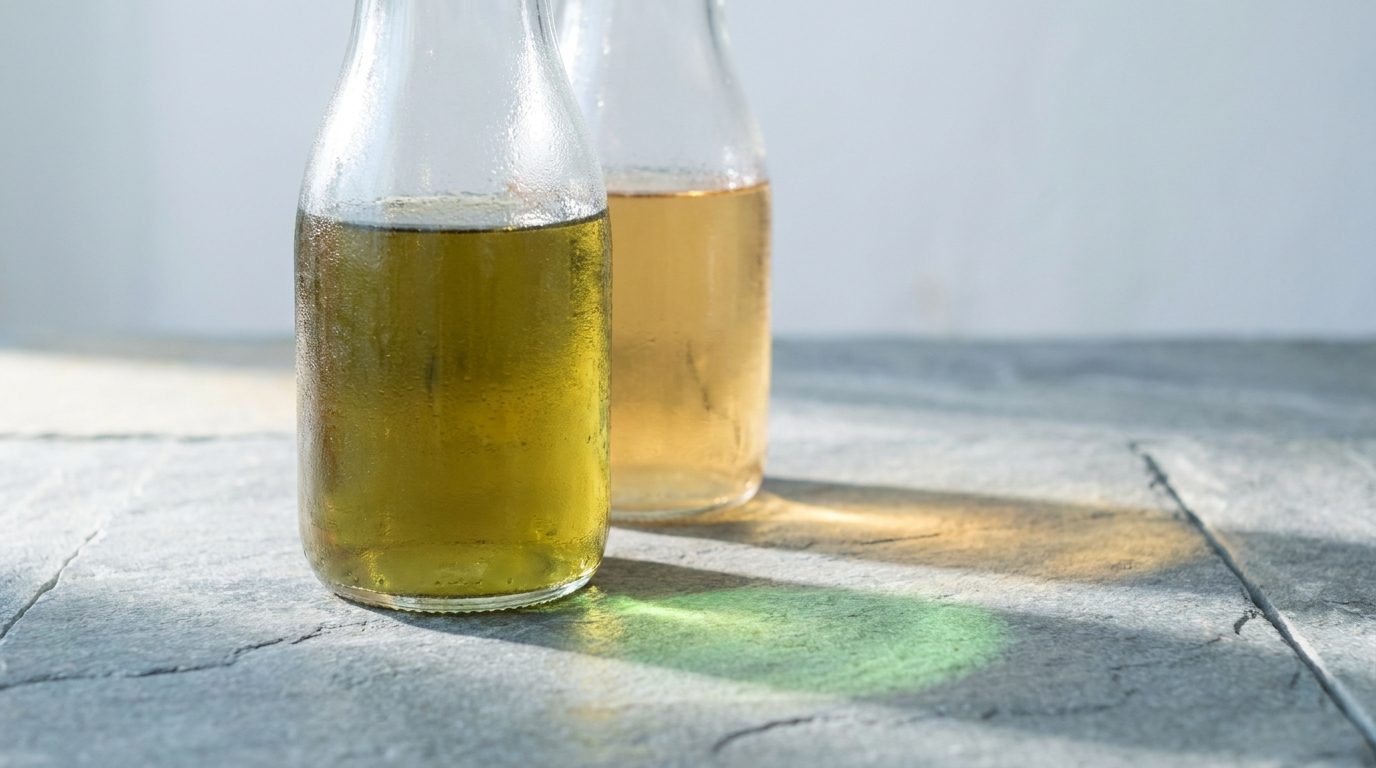
Hemp seed oil and flaxseed oil live in the same corner of the fridge door, cost about the same, and get marketed with the same word: omega-3. Nutritionally, though, they are doing quite different jobs.
The headline difference is concentration, not category
Flaxseed oil is an omega-3 concentrate. Roughly half of its fat — often more — is alpha-linolenic acid (ALA), the plant-form omega-3, and it carries comparatively little omega-6. That makes it the most ALA-dense common culinary oil on the shelf, and it is the reason people take it by the spoonful rather than cooking with it.
Hemp seed oil is a balanced food oil that happens to contain a useful amount of ALA. Most of its fat is linoleic acid, the plant-form omega-6, with ALA typically making up something in the mid-teens to around a fifth of total fat, plus a modest share of monounsaturated oleic acid and a small saturated fraction. Per spoonful you get less omega-3 from hemp than from flax — but you get it inside a fat profile that looks more like food and less like a supplement.
Hemp's genuine oddity: gamma-linolenic acid
Hemp seed oil contains a small percentage of gamma-linolenic acid (GLA), an omega-6 fatty acid your body normally has to manufacture from linoleic acid. Very few foods supply GLA directly; outside of hemp it turns up mainly in evening primrose, borage and blackcurrant seed oils, none of which anyone pours on a salad. Flaxseed oil contains essentially none.
Hemp also carries traces of stearidonic acid, an omega-3 further along the conversion pathway than ALA. Both are present in small amounts, so neither is a reason on its own to choose hemp — but they are a real compositional difference rather than marketing, and they are why hemp oil is not simply "weaker flax".
Stability, flavour, and which bottle you will actually finish
Neither oil belongs anywhere near a hot pan. Both are dominated by polyunsaturated fats that oxidize readily with heat, light and time, and both should be bought in dark bottles, refrigerated after opening and used within a few weeks: about 3 to 8 weeks for hemp seed oil, or as the label directs. Because flax is the more heavily polyunsaturated of the two, it is generally the more fragile — it turns bitter and fishy-smelling sooner, and once it does, most people abandon the bottle.
Flavour is where hemp tends to win the daily-use argument. Fresh flaxseed oil is mild and faintly nutty, but it has little to contribute to a dish. Fresh hemp oil is green, grassy and distinctly nutty, which makes it genuinely good on tomatoes, grain bowls, hummus and soup — food you would eat anyway. An oil you enjoy is an oil you finish while it is still fresh.
Side by side
| Hemp seed oil | Flaxseed oil | |
|---|---|---|
| Dominant fat | Linoleic acid (omega-6) | Alpha-linolenic acid (omega-3) |
| Omega-3 density | Moderate | High — the highest of common oils |
| Omega-6 content | Substantial | Low |
| GLA | Small but present | Essentially none |
| Flavour | Green, grassy, nutty | Mild, thin, fades fast |
| Fragility | High | Higher |
| Typical use | Dressings, dips, finishing | Spoonfuls, smoothies, blended in |
Does the omega-6 to omega-3 ratio settle it?
Hemp oil is often praised for its ratio of roughly three parts omega-6 to one part omega-3, which is far better balanced than most everyday cooking oils. Flax inverts the ratio entirely, sitting well on the omega-3 side. If your only goal is to shift a diet that is heavy in omega-6, flax moves the needle harder per tablespoon.
The catch is that ratios apply to whole diets, not to bottles. A spoon of flax will not offset a day built on fried food, and a spoon of hemp will not ruin an otherwise sensible one. What matters is the total: which oils you cook with, how much processed food you eat, and whether you eat any omega-3-rich whole foods at all.
So which one should you buy?
Buy flaxseed oil if you want the maximum plant omega-3 per spoonful, you are comfortable taking it as a supplement rather than as an ingredient, and you will keep it cold and replace it often. Buy hemp seed oil if you want a fat you will actually cook around — one that improves food, contributes ALA and GLA, and earns its fridge space by being used daily rather than dutifully. Plenty of people keep both: hemp as the everyday finishing oil, flax stirred into a smoothie a few times a week. Whichever you choose, buy the small bottle. The most common mistake with both oils is buying a litre of something that oxidizes in a couple of months, and then wondering why it tastes like paint. Compare labels, dates and storage advice with our other hemp seed oil guides before you commit to a size.